UniBizKit turns a declarative model into a complete, production-deployable business application. You describe your business — concepts, security roles, presentation and workflows — in a handful of JSON files, and UniBizKit generates:
The model is the single source of truth: schema, security, admin UI and business logic are all derived from it, so they can never drift apart. Because correctness and security are enforced by the generated backend — not by hand-written code — an AI agent (or a functional user) can safely build the whole application just by writing its model.
Everything is open source: UniBizKit itself (Apache 2.0) and the whole stack it builds on — self-hosted Supabase, PostgreSQL and React-Admin. No SaaS dependencies, no runtime lock-in.
The generated interface is the admin backoffice. A good compromise is to keep that generated backoffice for administering data and to hand-write a custom interface just for the end user (MDX/JSX pages on top of the same backend) — you get a tailored user experience where it matters, without rebuilding the admin side or the security behind it.
Source code and documentation on GitHub →
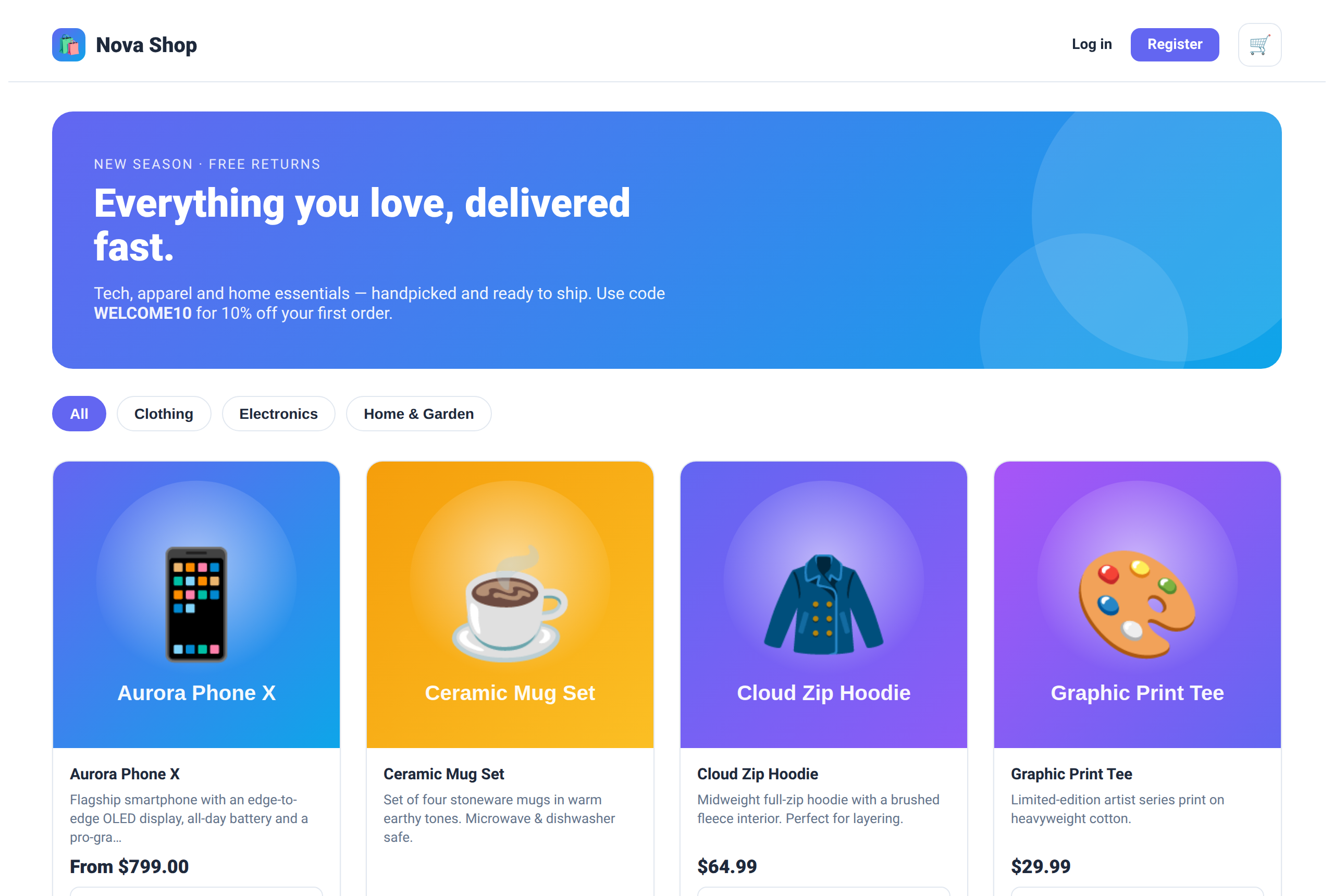
A small set of JSON files defines the whole B2C application: concepts (products, orders, customers…), security roles, presentation and an order workflow. From that model, UniBizKit generates the Supabase backend, its row-level security policies and the React-Admin backoffice — no SQL or React written by hand. On top of that generated stack, the model author adds a custom storefront for customers. Both talk to the same backend, which enforces the same rules for everyone.
The storefront is a custom MDX/JSX interface built for shoppers. It reads its data through the same backend as the admin side — categories, variants and prices all come from the concepts and their seed data, declared once in the model.
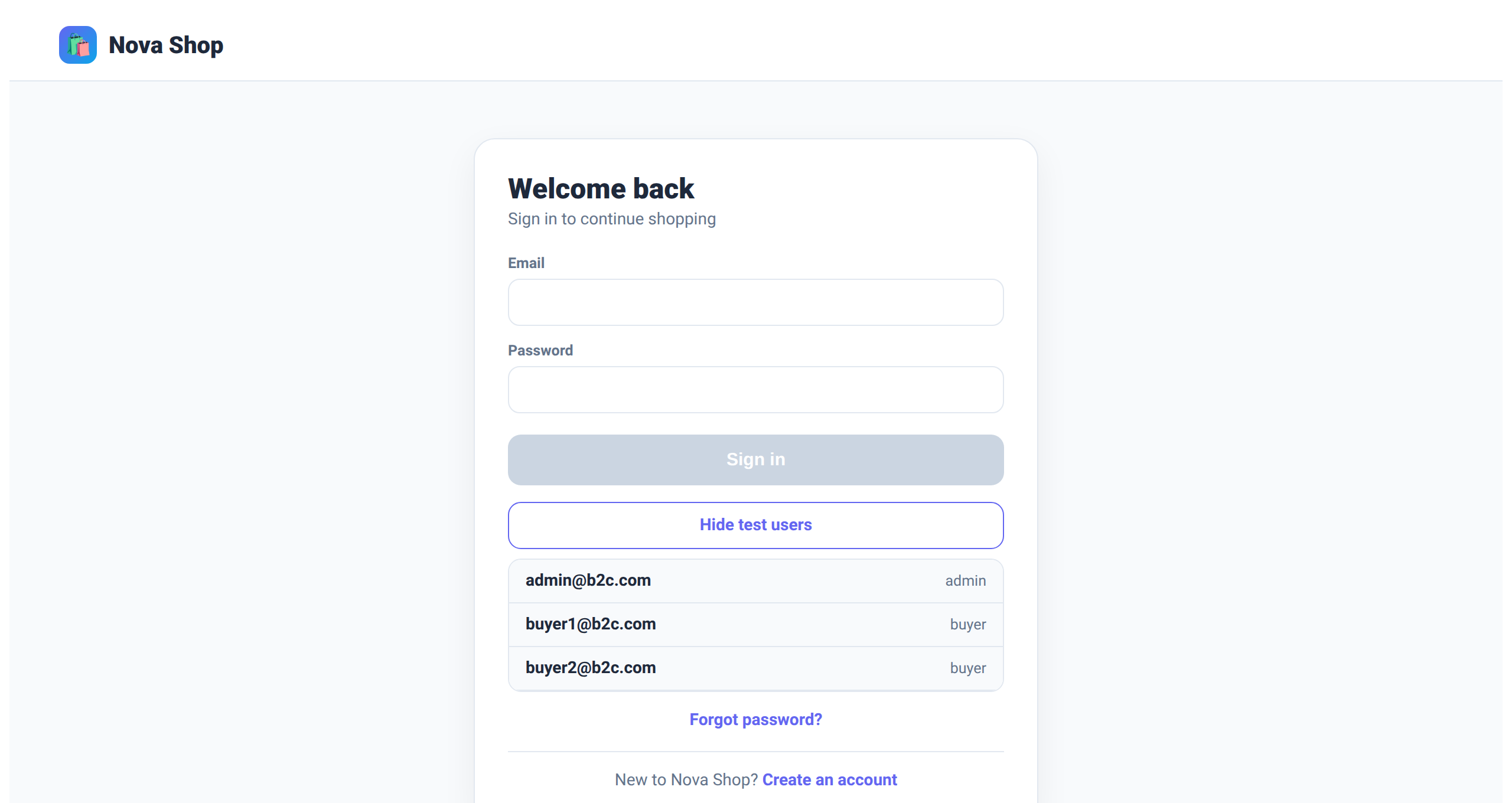
Click "fill test user", then pick admin to manage the whole catalog, or a
buyer account to shop as a customer.
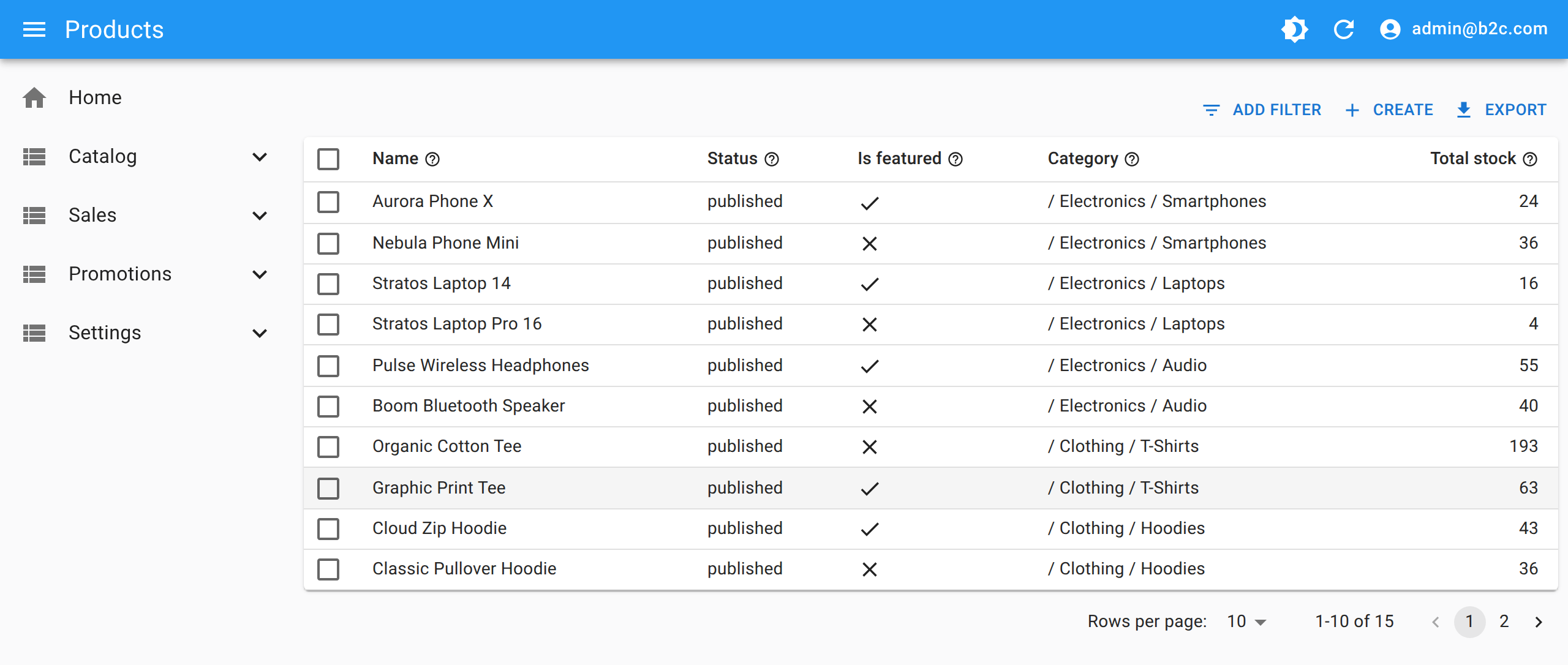
Signing in as admin opens the generated React-Admin backoffice — list, search, filter,
create and export views for every concept, laid out from the presentation config. The menus,
the columns and the row-level policies deciding what each role may see and touch are all
generated from the model.
Open any row and you get a complete edit form: fields typed from the concept, related records (variants, prices, categories) wired in, and the model's validations enforced both on the form and in the database.
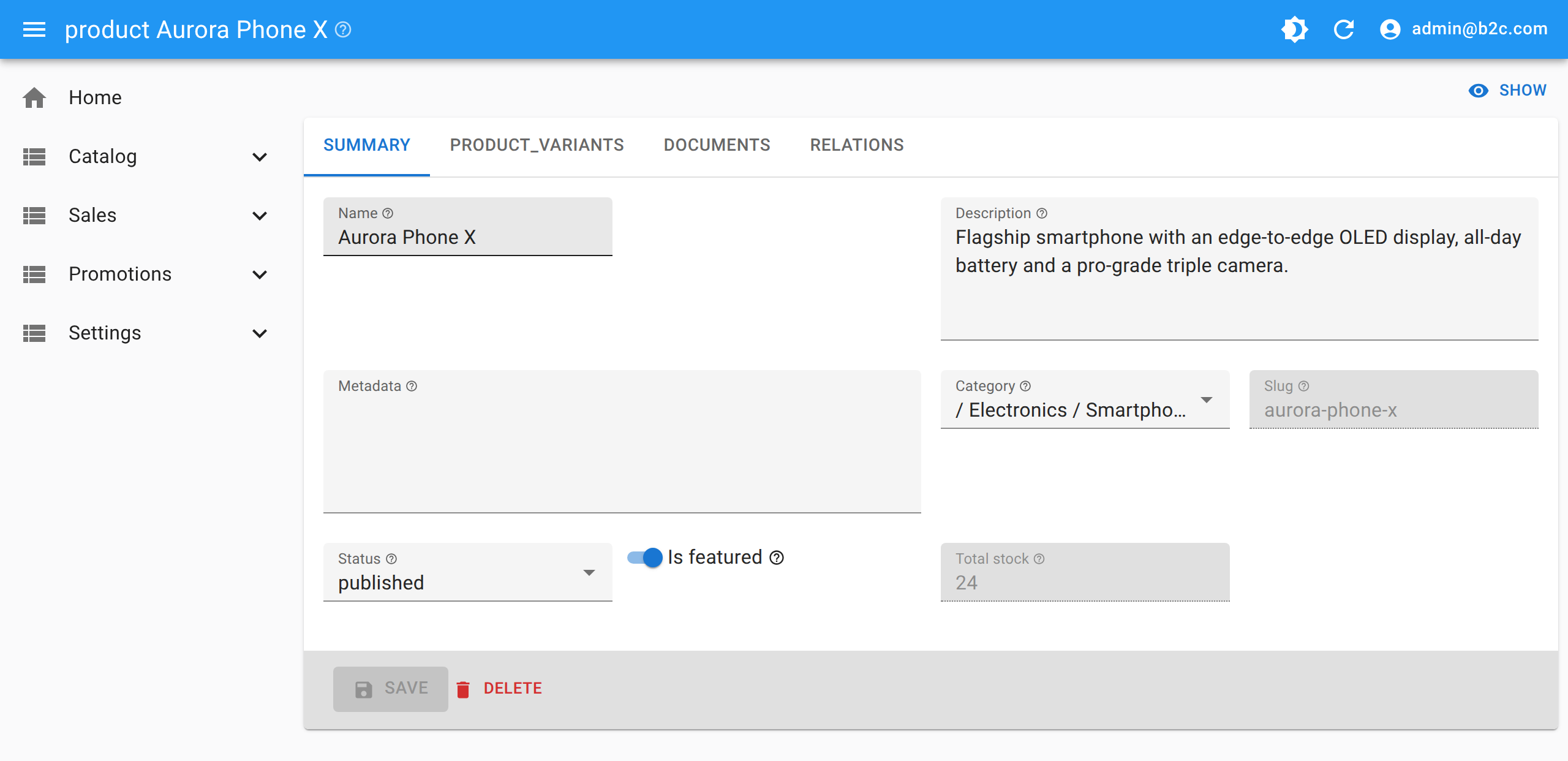
The backoffice, the edit form and the rules behind them are all generated from the model.
Here is the product concept as declared in the JSON: its name and description, its fields
and their types, the versioned image documents, and the category relation to another
concept.

From such declarations UniBizKit derives the product table and its row-level security
and the React-Admin list and edit views.